Why water exercise?
For older adults whose knees or hips hurt so much that even walking is a burden, exercising in water is a good alternative. In water, buoyancy supports your body weight, greatly reducing the load on your joints. At the same time, the water's resistance means the same movements work your muscles harder than on land. You don't need to know how to swim; simply walking in chest-deep water is a real workout.
The benefits of water exercise
- Less stress on joints: Buoyancy takes weight off your knees, hips, and back, so you can make movements that pain had ruled out.
- Better strength and endurance: Water resists movement far more than air, so simply walking and moving your arms in water combines strength and aerobic exercise.
- Less joint pain, better function: A 2016 Cochrane systematic review of 13 trials with 1,190 people with knee or hip osteoarthritis found that, right after the program, the water exercise groups had slightly less pain and disability and slightly better quality of life, with no serious side effects reported.
- Less worry about falling: The water supports you, so losing your balance does not mean an immediate fall, and you can practice balance with more peace of mind.
That said, the improvements in the Cochrane review were modest: about 5 points for pain and disability and about 7 points for quality of life on a 0–100 scale, mostly measured right after programs of 12 weeks or less. Water exercise alone will not cure arthritis; it is more accurate to see it as one way to keep exercising consistently.
| How often | 2–3 times a week |
|---|---|
| Time | 30–45 minutes per session (including warm-up and cool-down) |
| Water depth | Waist to chest height |
| What you need | Non-slip water shoes, swim cap, water bottle, towel |
Basic water exercises
1. Water walking (10–15 minutes)
- Stand in waist- to chest-deep water near the pool wall or a lane rope.
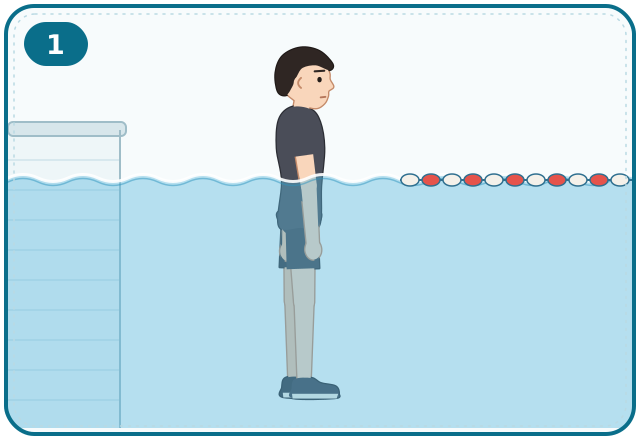
- Walk forward slowly, heel first as on land, swinging your arms naturally back and forth underwater.
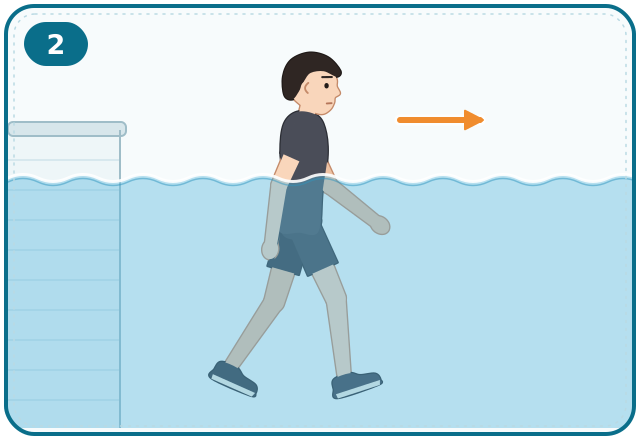
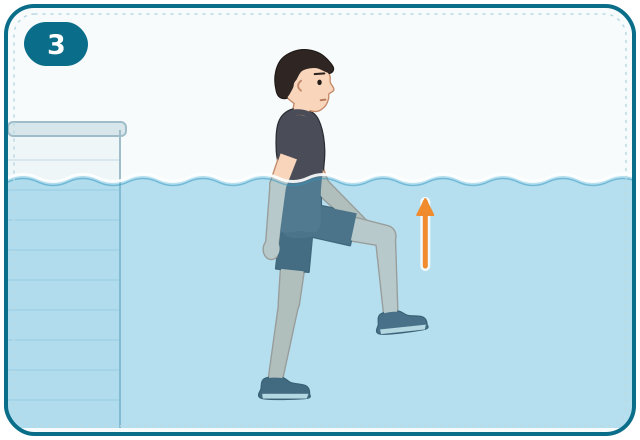
- As you get used to it, lift your knees a little higher, or mix in walking sideways and backward. Always hold the wall when walking backward.
2. Leg lifts at the wall (thighs and buttocks)
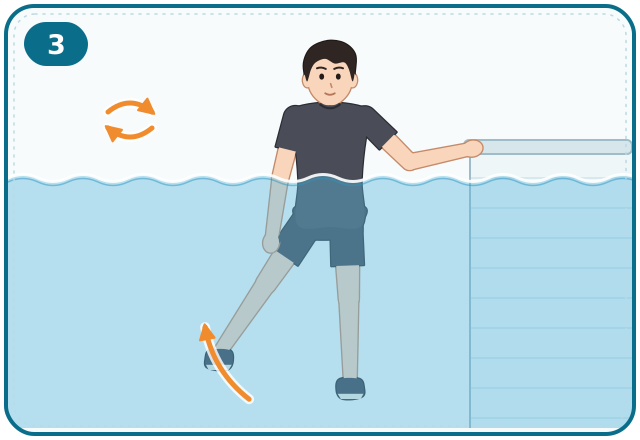
- Stand side-on to the pool wall, holding it with one hand.
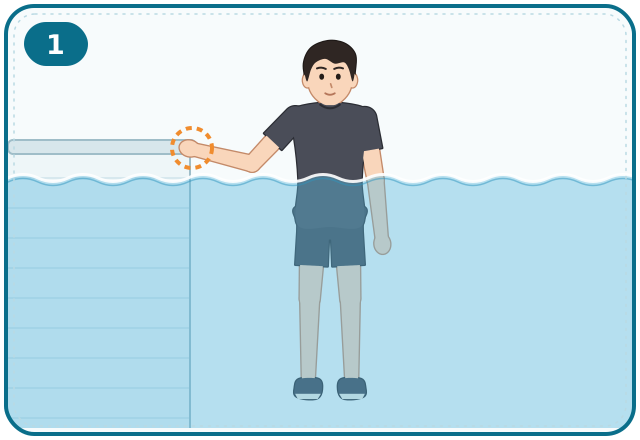
- Keeping your outside leg straight, lift it forward and lower it, then lift it out to the side and lower it.
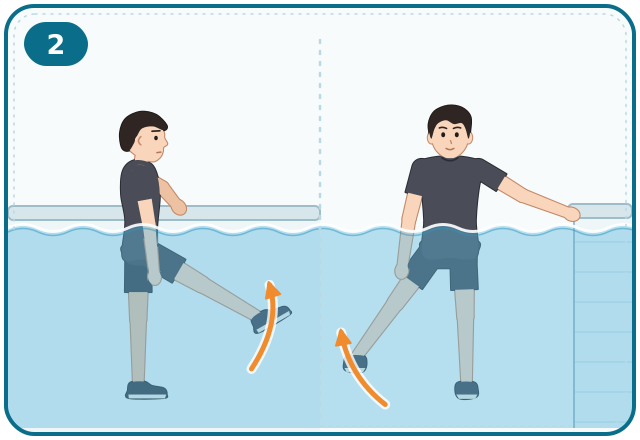
- Do 10 in each direction, then turn around and repeat with the other leg.
3. Heel raises at the wall (calves and balance)
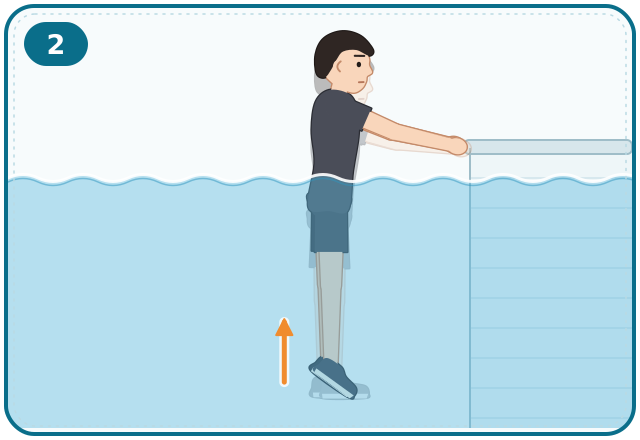
- Stand holding the wall with both hands.
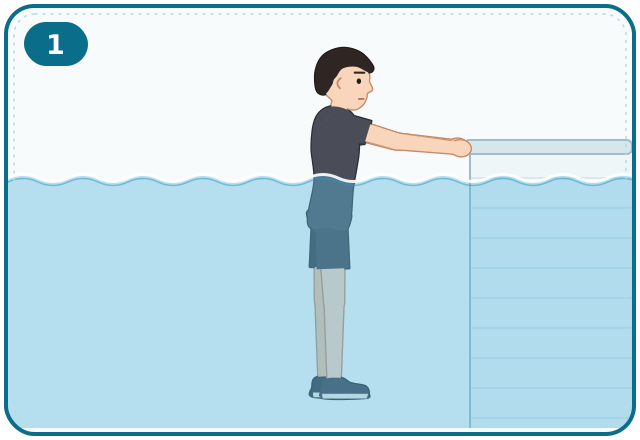
- Slowly rise onto your toes, then slowly lower. Repeat 10–15 times.
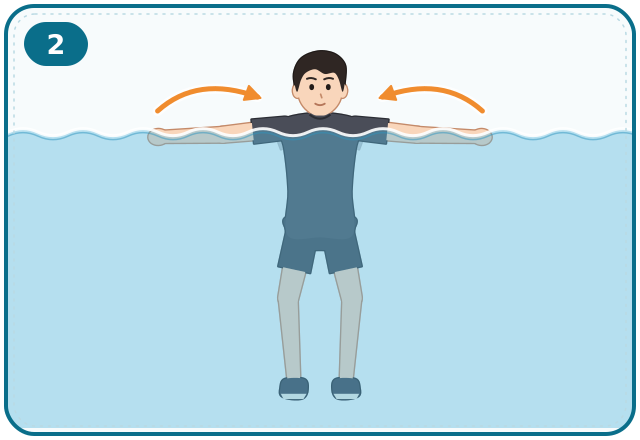
4. Underwater arm sweeps (shoulders and arms)
- Bend your knees slightly so the water comes up to your shoulders.
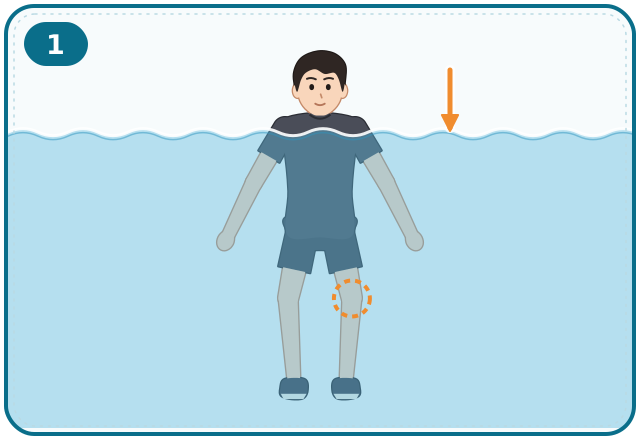
- Open your arms out to the sides, then bring them together in front, slowly pushing against the water, 10–15 times.
If it is hard to plan the moves yourself, look for water aerobics or water walking classes for older adults at a public sports center or pool near you. An instructor will tailor the moves and intensity, and having others there makes it easier to keep going.
Precautions for water exercise
Please keep these in mind
- Slips: The most common pool accidents happen out of the water. Walk slowly in changing rooms, showers, and on the pool deck, and wear non-slip water shoes. Always hold the handrail when getting in and out.
- Don't go alone: Exercise only in pools with a lifeguard, and only at a depth where your feet touch the bottom.
- Stay hydrated: You sweat even in water, so drink regularly even if you don't feel thirsty.
- Body temperature: Cold water cools you quickly and can raise blood pressure. Rinse in the shower first, enter slowly, and get out at once if you start shivering.
- When to check first: If you have heart or lung disease, talk to your doctor first. If you have open wounds, a skin or ear infection, or uncontrolled urinary incontinence, wait until it clears up.
- Not after meals or alcohol: Don't get in the water right after eating or after drinking alcohol.
Please keep in mind
- This article is based on information checked as of the date shown at the top. New research or changes in official guidelines may change the details, so please use it as a reference rather than taking it as definitive.
- For an accurate diagnosis and advice about your health, please see a doctor in person.