Why resistance bands?
Strength training tends to bring heavy gym machines to mind, but for older adults a rubber resistance band (such as a TheraBand or latex band) is a great starting point. Bands are light and inexpensive, so they are easy to use at home; you can adjust the resistance by how far you stretch them; and unlike dumbbells, there is little risk of dropping one and getting hurt. Many moves can be done seated, so even people who are unsure of their balance can begin.
The WHO's 2020 physical activity guidelines recommend that adults 65 and older do strength training that works all the major muscle groups (legs, hips, back, abdomen, chest, shoulders, and arms) on 2 or more days a week. Use chair squats for the lower body and bands for the upper body, and your weekly strength routine is well balanced.
The benefits of band training
- Keeps the upper body strong: Builds the strength you need for everyday tasks that use your arms and shoulders, such as carrying shopping bags, lifting things onto high shelves, and opening doors.
- Supports good posture: Pulling moves that work the back muscles help open up a back and shoulders that tend to round with age.
- Strength training that is easy on joints: The resistance increases gradually as the band stretches, so muscles get a workout without sudden loads.
- Helps prevent muscle loss: Regular resistance exercise is the foundation for preserving the muscle mass and strength that decline with age.
| Repetitions | 8–12 per exercise, 1–2 sets |
|---|---|
| How often | 2–3 days a week, not on consecutive days |
| Speed | 2 seconds to pull, 2–3 seconds to return (slowly) |
| What you need | The lightest resistance band, a sturdy chair without arms |
How to choose a band
Resistance bands are usually color-coded by strength, and the same color can mean a different strength from one brand to another. Start with the lightest band, and move up one level once you can do 2 sets of 12 with good form. Tube bands with handles or loop bands are easy to grip, which helps if your hands are weak.
Four seated band exercises
1. Seated row (back and back of the arms)
- Sit on a chair with both legs stretched out in front, and loop the middle of the band around the soles of both feet.
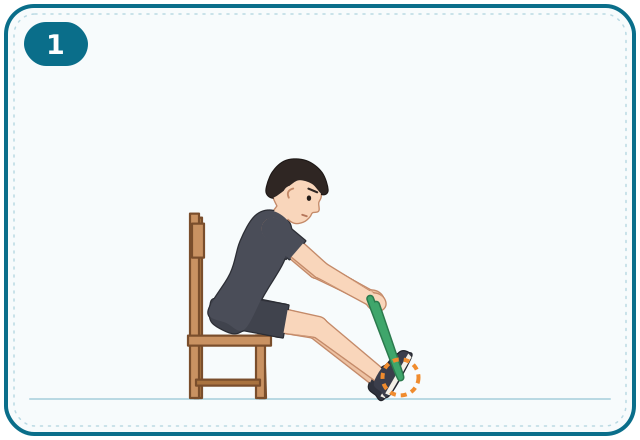
- Hold the ends of the band in each hand and sit up straight.
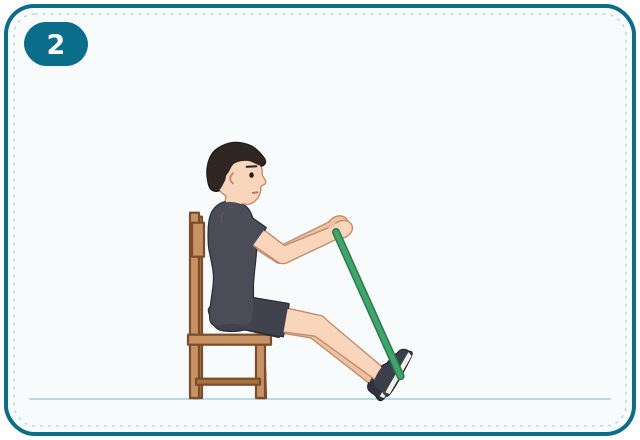
- Breathe out and pull back, keeping your elbows close to your sides, and squeeze your shoulder blades together.
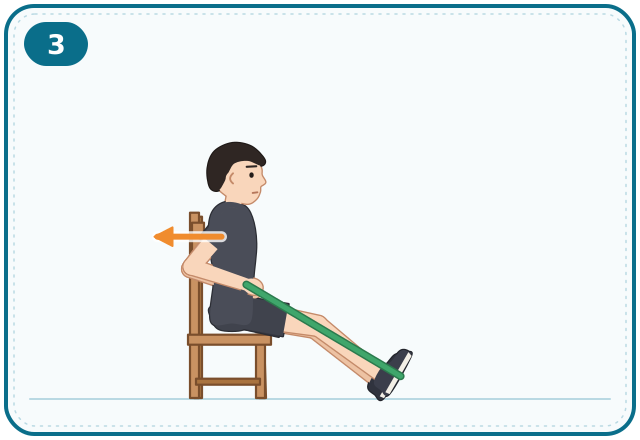
- Breathe in and slowly return to the starting position.
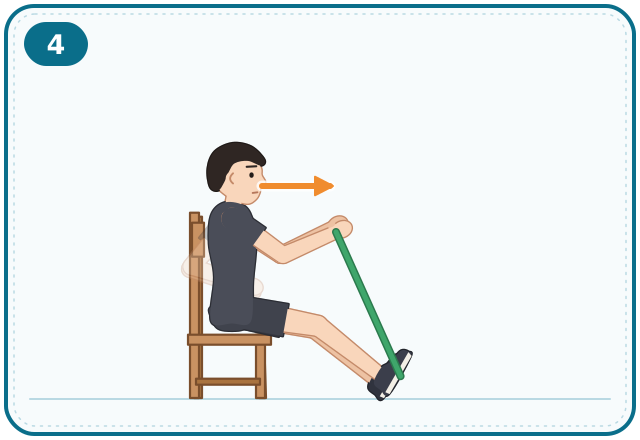
2. Biceps curl (front of the arms)
- Sit on a chair with the middle of the band under both feet, holding the ends with your palms facing up.
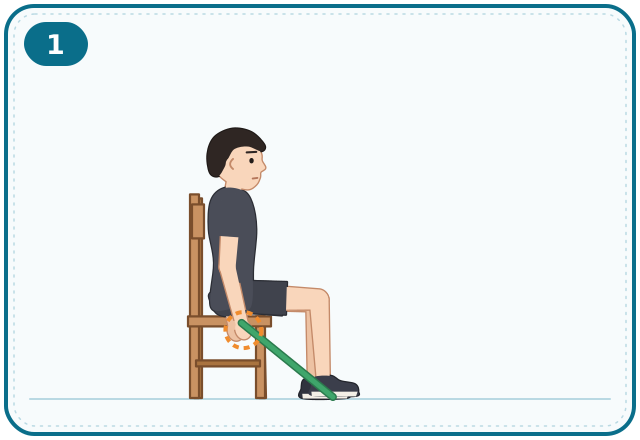
- Keeping your elbows against your sides, breathe out and bring your hands up toward your shoulders.
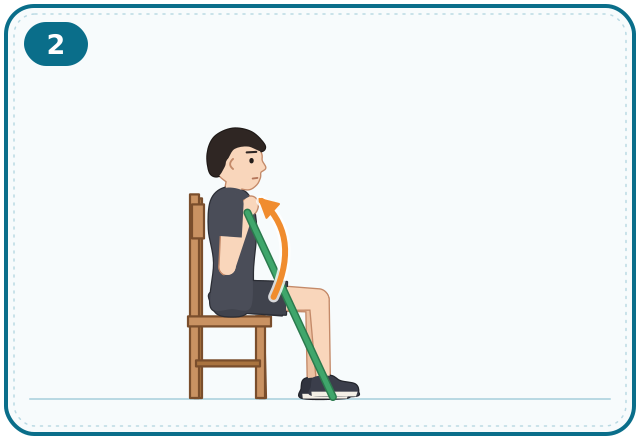
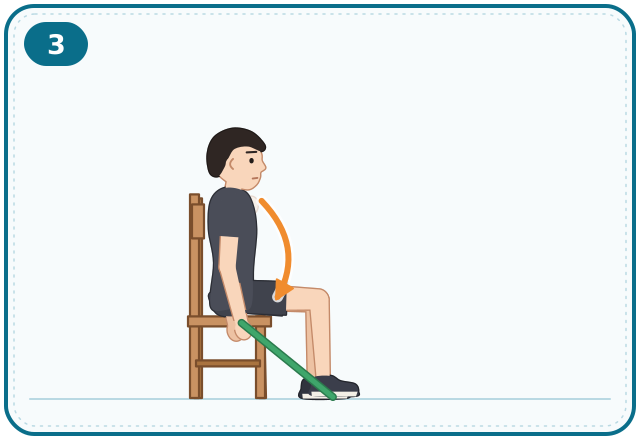
- Breathe in and lower them slowly. Keep your elbows from moving forward or back.
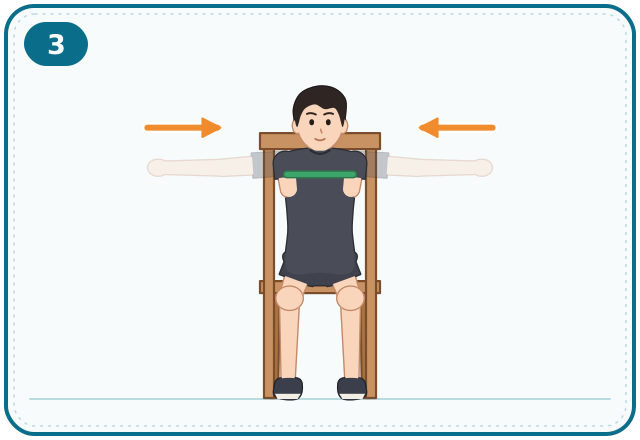
3. Chest-level band pull-apart (upper back and shoulders)
- Sit up straight, stretch your arms out in front at chest height, and hold the band shoulder-width apart.
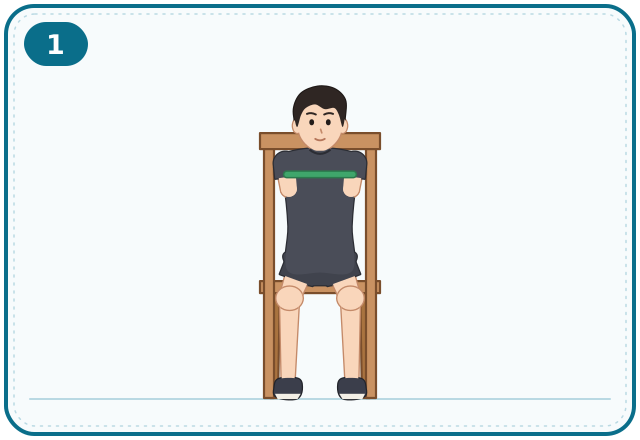
- Breathe out and pull your arms out to the sides, drawing the band toward your chest.
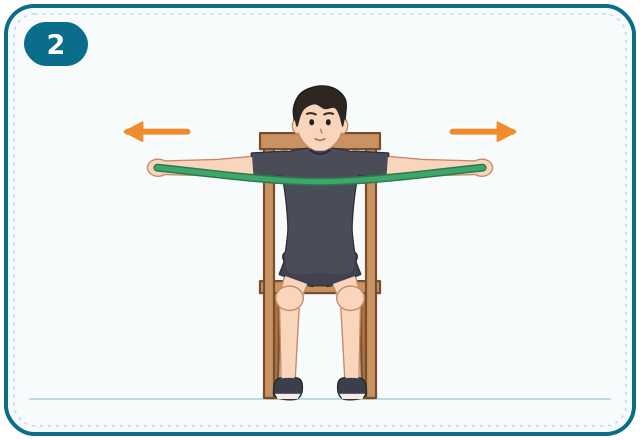
- Breathe in and slowly return. Keep your shoulders from creeping up toward your ears.
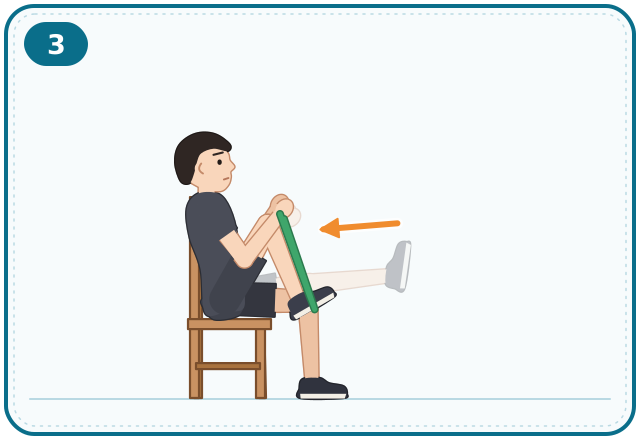
4. Leg press (front of the thighs and buttocks)
- Sit back in the chair, lift one knee toward your chest, and loop the band around the sole of that foot.
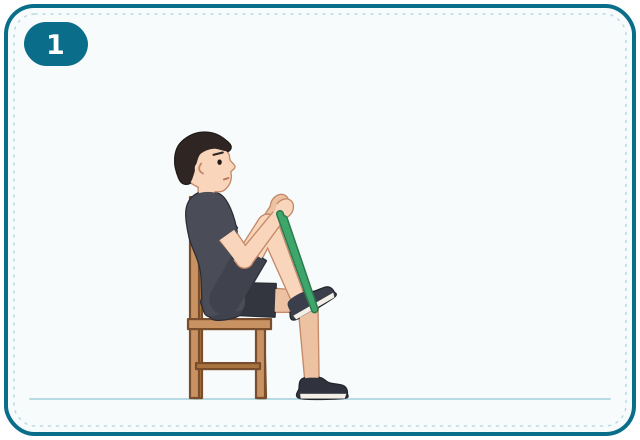
- Hold the ends in both hands, breathe out, and push your leg straight out in front.
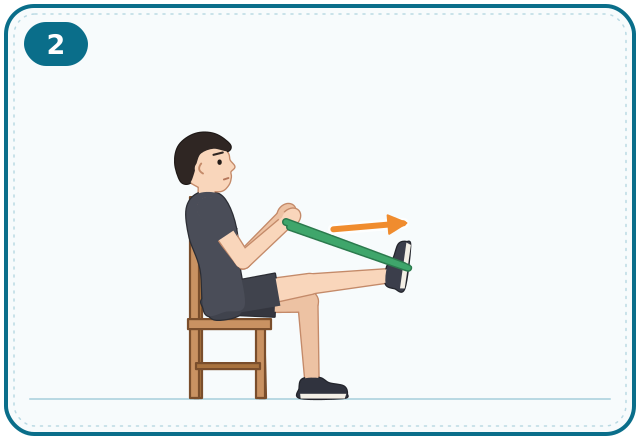
- Breathe in and slowly bend your knee to return. Finish one side, then do the other.
Precautions for band training
Please keep these in mind
- Inspect the band: Before each session, check for cracks, holes, or stickiness. An old band can snap mid-stretch and injure your face or eyes.
- Watch for snap-back: Anchor the band securely under your foot so it can't slip, and never let go while it is stretched.
- Don't hold your breath: Holding your breath while straining can spike your blood pressure. Breathe out as you pull and in as you return.
- Return slowly: Don't let the band yank your arms or legs back; control the movement on the way back too.
- Shoulder problems: If you have shoulder pain or a rotator cuff diagnosis, avoid moves that lift your arms overhead, and check with a doctor or physical therapist first.
- Latex allergy: If rubber gloves have ever made your skin swell or itch, choose a latex-free band.
Please keep in mind
- This article is based on information checked as of the date shown at the top. New research or changes in official guidelines may change the details, so please use it as a reference rather than taking it as definitive.
- For an accurate diagnosis and advice about your health, please see a doctor in person.