Why older adults need balance training
With age, the sense of balance declines gradually along with strength. When a fall leads to a fracture, especially a hip fracture, it often means a long stretch of bed rest, with a major impact on overall health. That is why the WHO's 2020 physical activity guidelines specifically recommend that adults 65 and older do activities that combine balance and strength on 3 or more days a week.
How much do balance exercises reduce falls?
A 2019 Cochrane systematic review pooled 108 trials involving more than 23,000 older adults living in the community. Groups that did balance and functional exercises had a fall rate about 24% lower than groups that did not exercise, and the reviewers rated the certainty of this evidence as high. Programs combining several types of balance and strength exercise showed a larger effect, about a 34% reduction, and tai chi also reduced falls.
The benefits of balance exercises
- Lower risk of falls: You get better at regaining your center when you tip.
- Stronger ankles and legs: Holding yourself on one leg trains the ankles and the muscles on the side of the hips together.
- Steadier walking: Your stride becomes more even and you stop shuffling, so walking feels easier.
- Confidence in moving: Less fear of falling makes it easier to get out and about.
| How often | 3+ days a week (daily is fine) |
|---|---|
| Time | 10–15 minutes per session |
| Where | Behind a sturdy chair, at the kitchen counter, or beside a wall |
| What you need | Non-slip shoes, or bare feet on a non-slip mat |
Three balance exercises to do at home
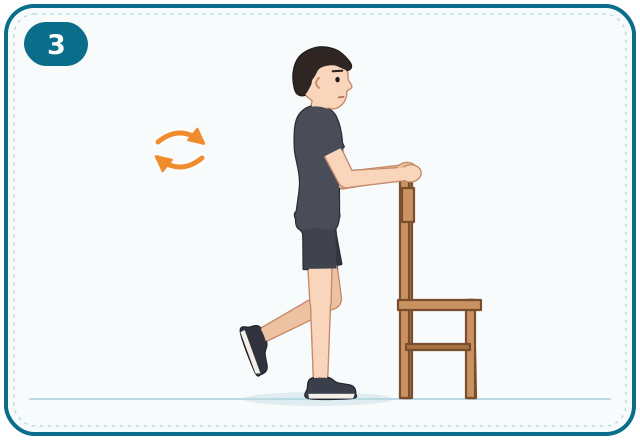
1. Single-leg stand, holding a chair
- Stand behind a sturdy chair and hold the back lightly with both hands.
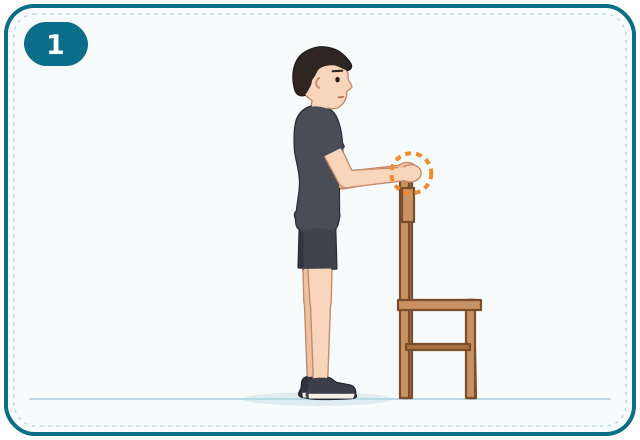
- Lift one foot slightly off the floor and hold for up to 10 seconds.
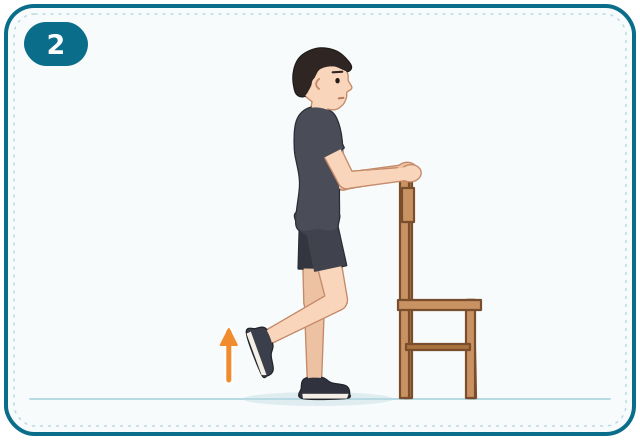
- Lower the foot and repeat on the other side. Do 10–15 on each side.
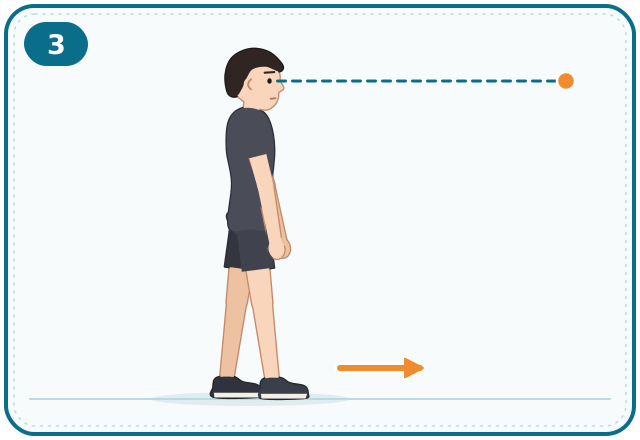
2. Heel-to-toe walk (tandem walk)
- Stand next to a wall so you can touch it right away if you wobble.
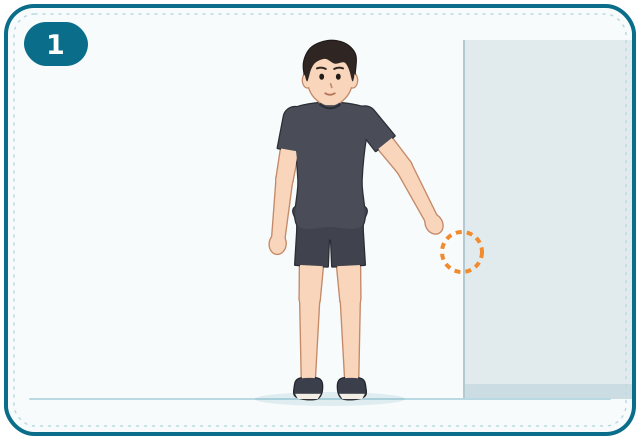
- Place the heel of one foot directly in front of the toes of the other foot, as if they were touching.
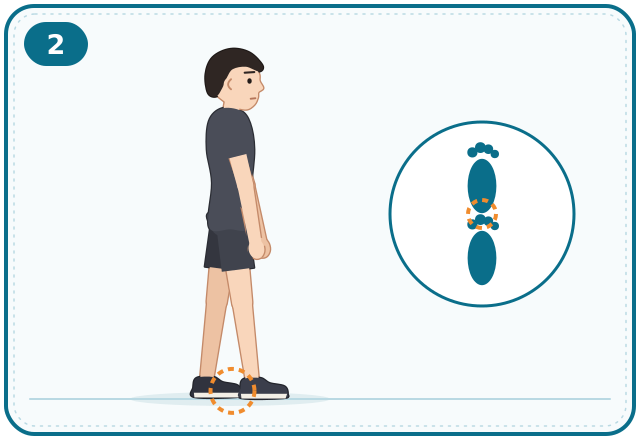
- Keep your eyes on a point ahead, not on your feet, and take 20 steps this way.
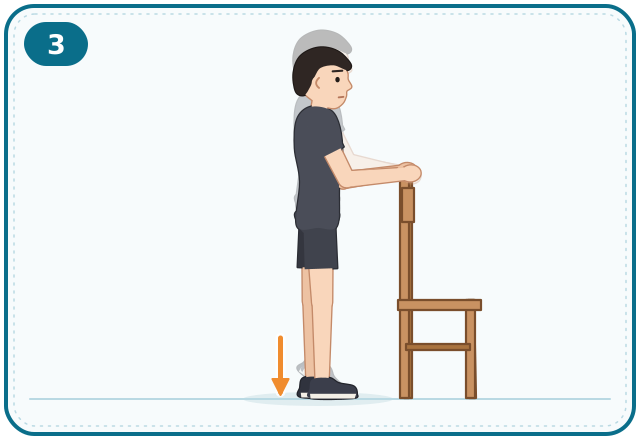
3. Heel raises
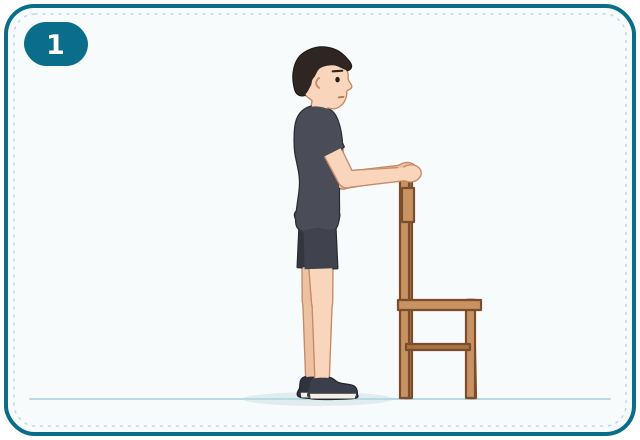
- Hold the back of a chair or the counter and stand with your feet shoulder-width apart.
- Breathe out, slowly rise onto your toes, and hold for 1–2 seconds.
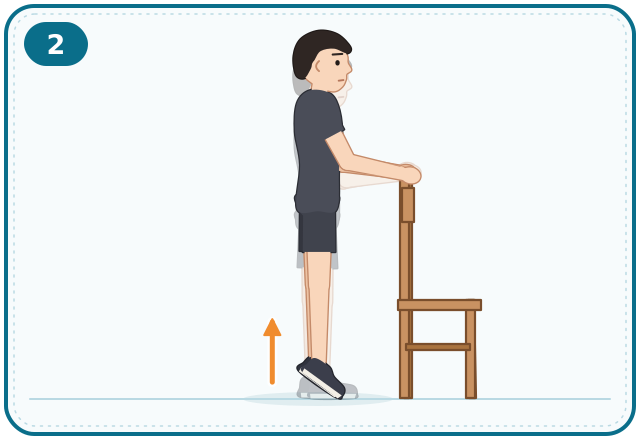
- Breathe in and lower slowly. Repeat 10–15 times.
Making it harder, step by step
Start by holding on with both hands, and as it gets easier, reduce your support: one hand → one finger → no hands. Once you are steady without your hands, you can try with your eyes closed, but only with a family member beside you and a chair within immediate reach. Group classes such as tai chi or yoga at a local community or senior center are also a good way to keep balance training going.
Precautions for balance exercises
Please keep these in mind
- Always stay near support: When exercising alone, keep a sturdy chair, counter, or wall within arm's reach. Don't use chairs with wheels or light furniture.
- Clear the floor: Remove cords, small rugs, and spills from around your exercise spot first. Socks alone can be slippery.
- If you feel dizzy: Rest on days when you feel dizzy or unwell. Be especially careful if you take medications that can cause dizziness, such as blood pressure drugs or sleeping pills.
- Serious balance problems: If you already fall often, or your balance is badly affected by bone, joint, or neurological conditions, get your doctor's go-ahead and, ideally, start under a physical therapist's guidance.
- Take it slow: In balance training, holding the correct position steadily matters more than speed.
Please keep in mind
- This article is based on information checked as of the date shown at the top. New research or changes in official guidelines may change the details, so please use it as a reference rather than taking it as definitive.
- For an accurate diagnosis and advice about your health, please see a doctor in person.