Why walking comes first
Walking needs no special equipment or place; you can start today. It is easy to adjust the intensity yourself, and it does not jolt the joints the way running does, which makes it a good first exercise for older adults who have been inactive for a while. Both the WHO's 2020 physical activity guidelines and the 2020 walking guidelines from Korea's Ministry of Health and Welfare treat regular aerobic activity that leaves you slightly out of breath, like walking, as the foundation of good health.
The benefits of walking
- Better heart and lung endurance: Regular brisk walking improves your cardiovascular fitness, so climbing stairs or shopping leaves you less breathless.
- Helps manage blood pressure, blood sugar, and weight: Regular aerobic activity is known to help prevent and manage chronic conditions such as high blood pressure, diabetes, and heart disease.
- Keeps leg muscles and bones strong: Walking is weight-bearing, so it works your leg muscles and gives your bones healthy stimulation.
- Lifts mood and improves sleep: Walking outdoors in daylight is good for your mood, and being more active by day helps you sleep at night.
How many steps a day?
"10,000 steps a day" is a popular goal, but it is not a well-supported standard. A 2022 meta-analysis of 15 international cohorts (Lancet Public Health) found that more steps meant a lower risk of death, but for people 60 and older, the benefit leveled off at about 6,000–8,000 steps a day (about 8,000–10,000 for those under 60). In this analysis of about 47,000 adults, the groups taking more steps had a 40–53% lower risk of death than the lowest quarter (about 3,500 steps a day). Because these are observational data, though, it cannot fully separate whether walking made people healthier or healthier people simply walked more.
The "10,000 steps" figure is said to have spread from the name of a Japanese pedometer product in the 1960s, not from research. In other words, there is no need to feel discouraged if you do not reach 10,000.
In terms of time, the WHO's 2020 guidelines recommend 150–300 minutes of moderate aerobic activity a week for adults 65 and older. Walking 30 minutes a day, 5 days a week, adds up to 150 minutes. If 30 minutes at once is too much, three 10-minute walks (morning, midday, and evening) work too.
| Recommended time | 150+ minutes of brisk walking a week (e.g., 30 minutes × 5 days) |
|---|---|
| Step goal | Add 1,000 steps a day to what you do now, working up to about 6,000–8,000 |
| Intensity | You can talk, but not sing |
| What you need | Well-fitting, cushioned walking shoes; water |
Good walking posture
- Eyes forward: Don't look down; look 10–15 m (30–50 ft) ahead, with your chin slightly tucked.
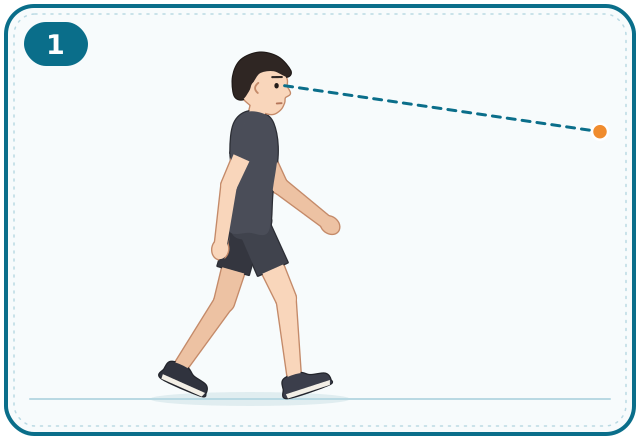
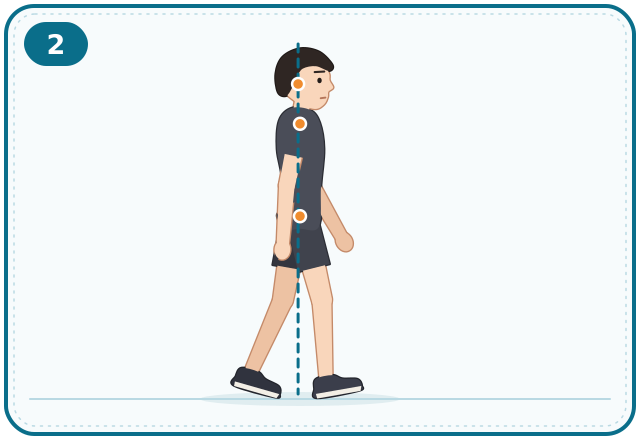
- Shoulders and back straight: Relax your shoulders, open your chest, and lightly brace your stomach so your back doesn't slump.
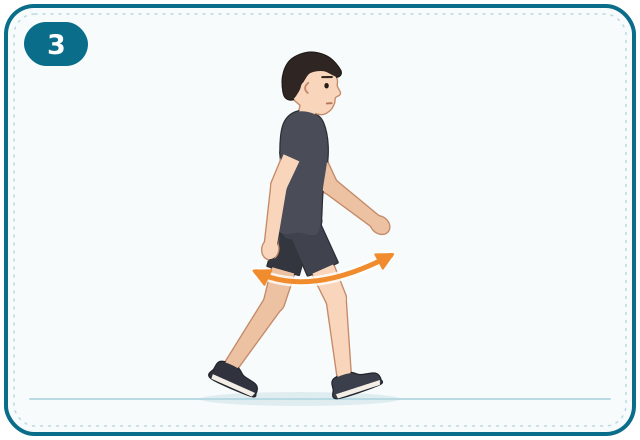
- Natural arm swing: Bend your elbows slightly and let your arms swing naturally back and forth. Swinging your arms also helps with balance.
- Heel first: Let your heel touch down first, then roll through the sole to your toes and push off.
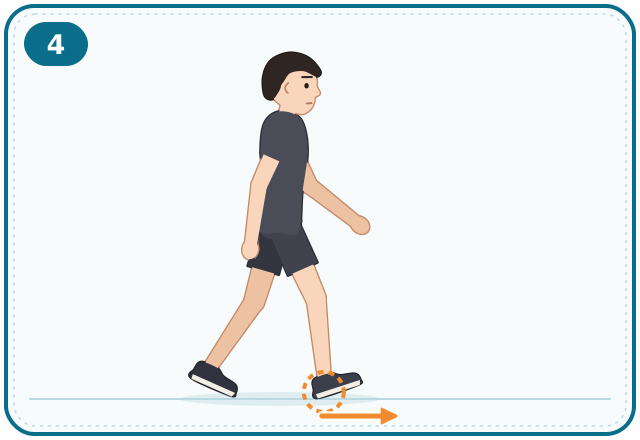
- Comfortable stride: Rather than forcing long strides, take steps slightly longer than usual at a steady rhythm.
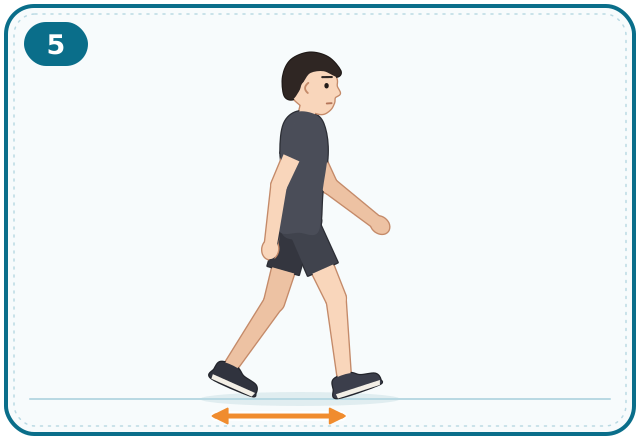
A step-by-step walking routine
Step 1: Warm-up (5 minutes)
Loosen up with ankle circles, gentle knee bends, and calf stretches. Walk slowly for the first 5 minutes to warm your body.
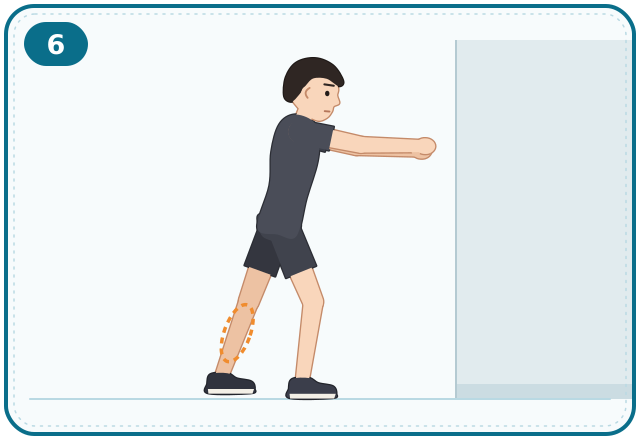
Step 2: Main walk (20–30 minutes)
Pick up the pace until you are slightly out of breath and feel warm. The right "moderate" intensity is when you can chat with someone beside you but would struggle to sing. For the first 2–3 weeks, start with 10–15 minutes and add 5 minutes at a time as your body adjusts.
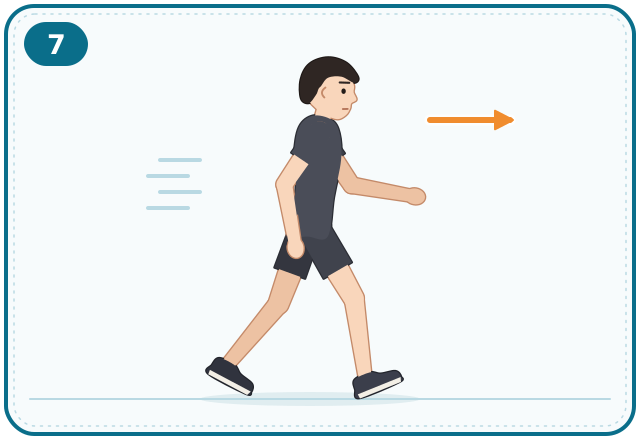
Step 3: Cool-down (5 minutes)
For the last 5 minutes, slow down again to let your breathing settle, then gently stretch your calves and the front and back of your thighs for 10–20 seconds each.
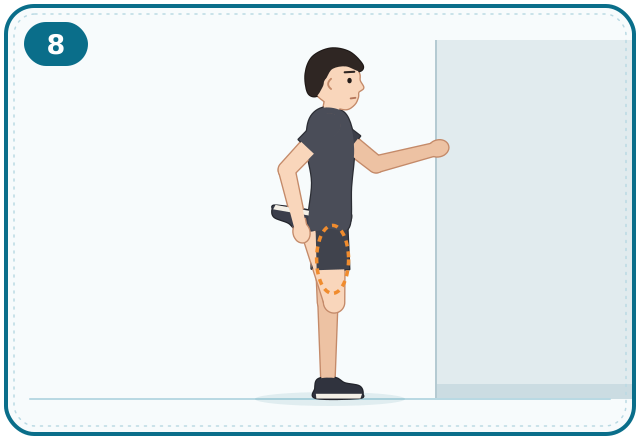
Precautions for walking
Please keep these in mind
- Shoes: Wear well-fitting walking shoes with cushioning and non-slip soles. Slippers or heeled shoes make falls more likely.
- Summer: Avoid the midday heat by walking in the morning or around sunset, and sip water before you feel thirsty.
- Winter: Cold early-morning air can raise blood pressure suddenly, so go out once it has warmed up, and avoid icy paths. In bad weather, walking indoors, such as in a corridor or a large shopping mall, is an option.
- If your knees hurt: Downhill slopes and stairs put heavy strain on the knees, so stick mostly to flat ground and cut back if pain starts. If joint pain is severe, water exercise may be an alternative.
- If you take diabetes medication: Long walks on an empty stomach can lower your blood sugar, so carry candy or juice.
- Safety: After dark, wear bright clothing, and always carry your phone.
Please keep in mind
- This article is based on information checked as of the date shown at the top. New research or changes in official guidelines may change the details, so please use it as a reference rather than taking it as definitive.
- For an accurate diagnosis and advice about your health, please see a doctor in person.